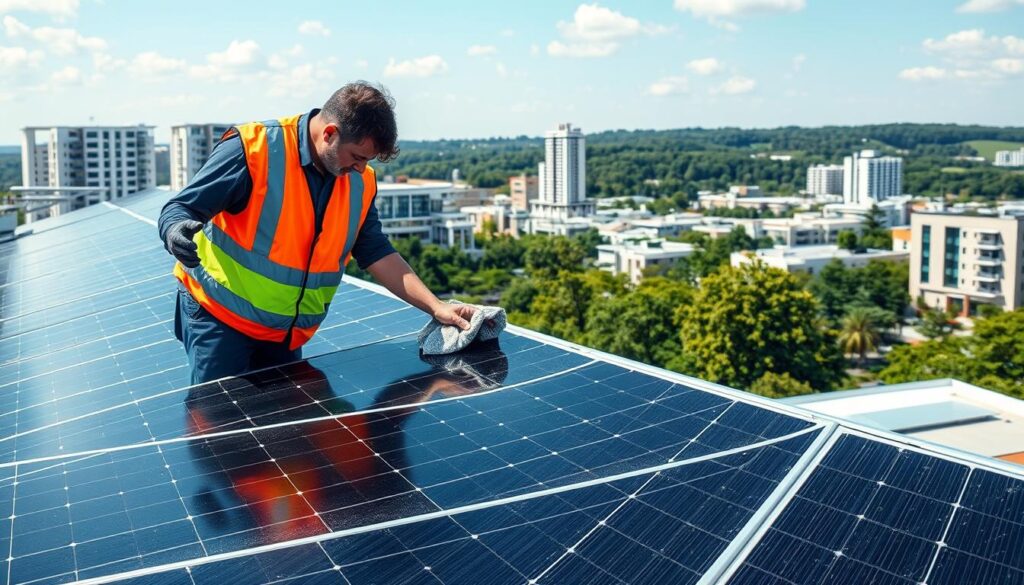
As the world shifts towards renewable energy, the importance of maintaining solar panels cannot be overstated. Cleaning these panels is crucial for ensuring they operate at maximum efficiency.

Solar Panels
Dirt and debris can significantly reduce the energy output of solar installations. Regular cleaning not only enhances energy production but also prolongs the lifespan of the panels. With the right techniques, individuals can optimize their solar panel’s performance.
This article will explore 7 genius hacks to clean solar panels effectively, helping homeowners and businesses in India maximize their investment in renewable energy.
Key Takeaways
- Regular cleaning enhances solar panel efficiency.
- Dirt and debris can significantly reduce energy output.
- Proper cleaning techniques prolong panel lifespan.
- Maximizing renewable energy investment is crucial.
- Effective cleaning hacks can optimize solar panel performance.
Why Clean Solar Panels Matter for Energy Production
The efficiency of solar panels is directly impacted by their cleanliness, making regular cleaning essential for optimal energy output. Dirty solar panels can lead to significant energy loss, affecting overall performance.
The Impact of Dirt and Debris on Solar Efficiency
Dirt, dust, and debris accumulation on solar panels can reduce their ability to absorb sunlight, thereby decreasing energy production. In the Indian climate, where dust storms and pollution are common, this issue is particularly pronounced.
Energy Loss Percentages from Dirty Panels
Studies have shown that dirty solar panels can result in energy loss ranging from 15% to 25% or more, depending on the severity of the contamination and the local environment.
Common Contaminants in Indian Climate
- Dust and sand particles
- Pollution and soot
- Bird droppings and other organic matter
How Often Should You Clean Your Solar Panels in India?
The frequency of cleaning solar panels in India depends on various factors, including the local climate, panel tilt angle, and surrounding environment.
Seasonal Cleaning Schedule
A general recommendation is to clean solar panels at least twice a year, with a more thorough cleaning after the monsoon season to remove accumulated debris.
Post-Monsoon Maintenance Tips
- Inspect panels for damage or wear
- Clean panels gently but thoroughly
- Check for and repair any damaged or loose wiring
By adopting a regular cleaning and maintenance schedule, solar panel owners in India can ensure their systems operate at peak efficiency, maximizing energy production and return on investment.
Hack1: The Microfiber Magic Method
The microfiber magic method is a game-changer for solar panel cleaning, offering a streak-free and efficient way to keep your panels in top condition.
Why Microfiber Works Better Than Regular Cloths
Microfiber cloths are superior to regular cloths for cleaning solar panels because they are gentle, absorbent, and leave no lint or streaks behind. This makes them ideal for the delicate surface of solar panels.
Step-by-Step Cleaning Process
Dry Dusting Technique
Begin by gently dusting the solar panels with a dry microfiber cloth to remove loose debris. This prevents scratches during the cleaning process.
Wet Cleaning Approach
For more thorough cleaning, dampen a microfiber cloth with water (or a mild cleaning solution if necessary) and wipe down the panels. Avoid using excessive water to prevent damage to the panels or their electrical components.
Where to Find Quality Microfiber Cloths in India
Quality microfiber cloths can be found in various hardware stores, online marketplaces like Amazon, or specialty stores that sell cleaning supplies. Look for cloths that are specifically designed for cleaning delicate surfaces.
| Microfiber Cloth Feature | Benefit for Solar Panel Cleaning |
| Gentle on surfaces | Prevents damage to solar panels |
| Lint-free | Ensures streak-free cleaning |
| High absorbency | Efficiently cleans without excessive water |
Hack2: DIY Eco-Friendly Cleaning Solutions
For those looking to clean their solar panels without breaking the bank or harming the environment, a DIY eco-friendly cleaning solution is the way to go. This approach not only reduces waste but also ensures your solar panels operate at maximum efficiency.
Vinegar and Water Solution Recipe
A simple and effective cleaning solution can be made by mixing water with white vinegar. The recommended ratio is 1 part vinegar to 8 parts water. This solution is gentle on solar panels and effective at removing dirt and grime.
Biodegradable Soap Options Available in Indian Markets
For those preferring a soapy solution, biodegradable soap is a good alternative. Brands like Surf Excel Matic and Aquaguard’s eco-friendly soap are available in Indian markets and can be used to clean solar panels.
What Cleaning Agents to Avoid
It’s crucial to avoid using harsh chemicals and abrasive materials that can damage solar panels.
Harmful Chemicals for Solar Panel Surfaces
- Ammonia-based cleaners
- Abrasive chemicals
Abrasive Materials That Cause Scratching
- Scouring pads
- Hard-bristled brushes
Hack3: The Early Morning Cleaning Technique
Early morning cleaning is a simple yet effective hack for maintaining solar panel efficiency. Cleaning solar panels at the right time can make a significant difference in their performance.
Why Timing Matters for Solar Panel Cleaning
The timing of solar panel cleaning is crucial because it directly affects the panels’ efficiency and longevity. Cleaning during the early morning ensures that the panels are free from dew and dirt, which can impact their performance throughout the day.
Avoiding Heat Damage During Cleaning
Cleaning solar panels during the early morning also helps avoid heat damage. When panels are hot, sudden changes in temperature can cause them to degrade faster. Avoid cleaning during peak sun hours to prevent this issue.
Adapting Cleaning Times During Different Indian Seasons
India’s diverse climate means that the ideal cleaning time can vary by season. For instance, during the monsoon season, panels may need less frequent cleaning due to natural rainfall, while in dry seasons, more frequent cleaning may be necessary.
| Season | Ideal Cleaning Frequency | Reason |
| Monsoon | Less Frequent | Natural rainfall cleans panels |
| Summer | More Frequent | Dust accumulation is higher |
| Winter | Moderate | Dew and mild temperatures |
Solar Panels Maintenance: Automated Cleaning Systems
Solar panel owners in India are increasingly turning to automated cleaning systems to maintain their solar panels’ efficiency. Automated cleaning systems offer a convenient and efficient way to keep solar panels free from dust and debris, thereby maximizing energy production.
Cost-Effective Sprinkler Systems
One of the automated cleaning solutions gaining popularity is the sprinkler system. These systems are cost-effective and can be integrated into existing solar panel setups. They use water to clean the panels, ensuring a thorough removal of dirt and dust.
Robotic Cleaners Available in India
Robotic cleaners are another innovative solution for solar panel maintenance. Several models are available in the Indian market, catering to different sizes and types of solar panel installations.
Price Comparison of Popular Models
- Model A: ₹50,000 – Suitable for small residential installations
- Model B: ₹1,00,000 – Ideal for larger commercial solar panel setups
- Model C: ₹80,000 – Offers advanced navigation and cleaning technology
Installation Requirements
The installation of robotic cleaners requires careful planning, including assessing the solar panel layout and ensuring compatibility with the existing infrastructure.
Return on Investment Analysis
While the initial investment in automated cleaning systems may seem significant, the long-term benefits include increased energy output and reduced maintenance costs. A detailed ROI analysis can help solar panel owners understand the financial advantages of adopting these systems.
By adopting automated cleaning systems, solar panel owners in India can ensure their systems operate at peak efficiency, contributing to a more sustainable energy future.
Hack5: The Rainwater Collection Method
Rainwater harvesting offers a sustainable solution for cleaning solar panels. This method not only conserves water but also reduces the reliance on municipal water supplies, making it an eco-friendly choice for solar panel maintenance.
Setting Up a Rainwater Harvesting System
To set up a rainwater harvesting system, homeowners can start by installing collection tanks or barrels under their downspouts. Simple DIY collection methods can be employed, such as using large drums or tanks that can store significant amounts of rainwater.
Simple DIY Collection Methods
One can use readily available materials like large plastic barrels or tanks to collect rainwater. Ensuring that these containers are clean and free from contaminants is crucial.
Filtering Collected Water
Filtering the collected rainwater is essential to remove debris and contaminants. Simple filtration methods, such as using mesh screens or basic water filters, can be effective.
Using Collected Water for Panel Cleaning
The collected rainwater can then be used to clean solar panels, especially during dry periods. This method is not only eco-friendly but also cost-effective, as it reduces the need for tap water.

rainwater harvesting for solar panels
Compliance with Indian Rainwater Harvesting Regulations
It’s essential to comply with Indian regulations regarding rainwater harvesting. Homeowners should check local guidelines to ensure their rainwater harvesting systems are installed and maintained according to legal standards.
By adopting the rainwater collection method, solar panel owners in India can maintain their panels efficiently while contributing to water conservation efforts.
Hack6: Preventative Maintenance Strategies
To maximize the efficiency of solar panels, it’s crucial to implement preventative maintenance strategies. These proactive measures help in reducing the frequency of cleaning and maintaining the overall health of the solar panel system.
Anti-Soiling Coatings
One effective method is applying anti-soiling coatings to the solar panels. These coatings reduce the adherence of dust and debris, making cleaning easier and less frequent. Anti-soiling coatings are particularly beneficial in regions with high dust levels.
Trimming Nearby Trees and Vegetation
Trimming nearby trees and vegetation is another crucial preventative measure. Overhanging branches can cast shadows on the solar panels, reducing their efficiency. Regular trimming ensures maximum sunlight exposure.
Dust Barriers in Dry Regions of India
In dry regions of India, dust barriers can be an effective solution. These barriers help in reducing the amount of dust that reaches the solar panels.
When setting up dust barriers, it’s essential to choose materials that can withstand the Indian climate. Durable materials like metal or heavy-duty fabric are recommended.
Installation Guidelines
Proper installation of dust barriers is critical. They should be placed strategically around the solar panel installation to maximize their effectiveness. It’s advisable to consult with a professional to ensure correct installation.
By implementing these preventative maintenance strategies, solar panel owners can significantly enhance the efficiency and longevity of their systems.
Hack7: Professional Cleaning Tools on a Budget
Efficient solar panel cleaning is within reach, even for those on a tight budget, with the right cleaning tools. Investing in professional cleaning tools doesn’t have to be expensive.
Telescopic Cleaning Poles
Telescopic cleaning poles are a valuable tool for reaching high solar panels without using ladders or scaffolding, enhancing safety and efficiency. These poles are adjustable, allowing users to reach panels at various heights.

Edit
Full screen
Delete
telescopic cleaning poles
Water-Fed Brush Systems
Water-fed brush systems offer a comprehensive cleaning solution, combining water supply with soft brushes to gently remove dirt from solar panels. This method is effective and gentle on the panels.
DIY Alternatives to Expensive Equipment
For those on a very tight budget, DIY alternatives can be a cost-effective solution. Using household items or locally sourced materials can help create effective cleaning tools.
Local Hardware Store Solutions
Local hardware stores often carry a variety of cleaning tools that can be adapted for solar panel cleaning. Shopping locally can help find affordable solutions.
Online Marketplaces for Affordable Tools
Online marketplaces offer a wide range of cleaning tools at competitive prices. Shopping online can provide access to a broader selection of products and customer reviews to help make informed decisions.
Conclusion: Maximizing Your Solar Panel Investment Through Proper Cleaning
Proper cleaning is crucial for maximizing the efficiency of solar panels and protecting your investment. The 7 genius hacks discussed in this article provide practical and effective methods for maintaining clean solar panels. By implementing these strategies, you can ensure your solar panels operate at peak performance, generating maximum energy and reducing your reliance on the grid.
Regular cleaning, whether through DIY methods or automated systems, is essential for removing dirt and debris that can significantly reduce solar panel efficiency. By investing time and resources into proper cleaning, you can maximize your solar panel investment and enjoy a higher return on investment.
By applying these simple yet effective hacks, you can maintain your solar panels’ efficiency, reduce maintenance costs, and contribute to a more sustainable future. Effective solar panel maintenance is key to maximizing efficiency and your solar panel investment.
FAQ
How often should I clean my solar panels in India?
The frequency of cleaning solar panels in India depends on various factors, including the climate, location, and surrounding environment. Generally, it is recommended to clean solar panels at least twice a year, with a more thorough cleaning after the monsoon season.
What is the best method to clean solar panels?
The microfiber magic method is a highly effective way to clean solar panels. This involves using a microfiber cloth to gently wipe away dirt and debris. For more thorough cleaning, a mixture of water and vinegar or a mild biodegradable soap can be used.
Can I use regular household cleaning products on my solar panels?
No, it is not recommended to use regular household cleaning products on solar panels. Harsh chemicals can damage the panels’ surface, reducing their efficiency. Instead, opt for eco-friendly cleaning solutions like vinegar and water or biodegradable soap.
Are automated cleaning systems worth the investment for solar panels?
Automated cleaning systems, such as robotic cleaners or sprinkler systems, can be a worthwhile investment for solar panels, especially for large installations. They can help maintain efficiency and reduce labor costs. A return on investment analysis can help determine the feasibility of such systems.
How can I prevent dust and debris from accumulating on my solar panels?
Preventative maintenance strategies, such as applying anti-soiling coatings, trimming nearby trees and vegetation, and using dust barriers in dry regions, can help minimize dust and debris accumulation on solar panels.
Can I use rainwater to clean my solar panels?
Yes, rainwater can be used to clean solar panels. In fact, setting up a rainwater harvesting system can provide a sustainable source of water for cleaning. Ensure the collected water is filtered before use to prevent any debris or contaminants from damaging the panels.
What are some budget-friendly options for professional cleaning tools?
Telescopic cleaning poles, water-fed brush systems, and DIY alternatives to expensive equipment can be found at local hardware stores or online marketplaces, providing affordable solutions for solar panel cleaning.
Are there any specific regulations I need to comply with when using rainwater harvesting for solar panel cleaning?
Yes, it is essential to comply with Indian rainwater harvesting regulations when setting up a rainwater harvesting system for solar panel cleaning. Familiarize yourself with local guidelines and ensure your system meets the necessary standards.